
 0086-13958366031
 0086-13958366031
If a caregiver sets a regulator dial to 2 L/min and lea […]
If a caregiver sets a regulator dial to 2 L/min and leaves it there while the patient's condition changes, the oxygen delivered no longer matches the prescription written weeks ago. Oxygen flow rate — the volume of oxygen delivered per minute, expressed in liters per minute (L/min or LPM) — is the single setting that connects a clinical prescription to the hardware at the bedside. It determines how much oxygen a patient actually inhales, how fast a cylinder empties, and which components the supply chain must provide. This article explains what the number means, the flow ranges published for common delivery devices, and where regulators, wall flow meters, and humidifiers fit into delivering an accurate rate.
An oxygen flow rate states how many liters of oxygen pass through the delivery device every minute. A setting of 2 L/min means two liters of oxygen leave the flow meter or regulator each minute and mix with the air the patient breathes. Because room air already contains about 21% oxygen (an FiO2 of 0.21), blending in extra oxygen raises the fraction the patient inhales. With a nasal cannula, a practical rule of thumb is that each liter per minute above the first adds roughly four percentage points of FiO2, so 1 L/min approximates 24% and 6 L/min approaches 44%.
Flow rate and FiO2 are related but not identical. A low-flow device such as a standard nasal cannula or simple mask supplies only part of what the patient inhales in each breath — an adult at rest draws peak inspiratory flows around 30 L/min, and far more in respiratory distress — so the remainder is made up of room air and the final FiO2 varies with breathing pattern. High-flow systems deliver the full inspiratory demand at a set concentration, which is why a high-flow nasal cannula running at up to 60 L/min can hold FiO2 near 100% while a 6 L/min cannula cannot.
The ranges below are the ones most nursing and respiratory references publish for common adult devices. Treat them as planning figures rather than guarantees: the delivered concentration depends on the patient's breathing pattern, mask fit, and the calibration of the flow meter in use.
| Delivery device | Typical flow rate | Approximate delivered FiO2 |
|---|---|---|
| Nasal cannula | 1–6 L/min | 24%–44% |
| Simple face mask | 6–10 L/min | 35%–50% |
| Non-rebreather mask | 10–15 L/min | 60%–80% |
| High-flow nasal cannula | Up to 60 L/min | Up to ~100% |
Two details in this table matter for procurement as much as for clinical care. First, masks fed below about 5 L/min can allow exhaled carbon dioxide to pool inside the mask, so the flow meter feeding a simple mask must reliably hold its setting. Second, high-flow therapy at 60 L/min consumes oxygen far faster than the piping or cylinder banks of older facilities were designed for, which is why flow capacity has become a commissioning question, not just a bedside one.
The difference between a meter reading and reality is invisible from across a room. A flow tube that reads 3 L/min while actually passing 2 quietly under-delivers oxygen to a patient who was prescribed more; one that passes 5 delivers a therapy the prescriber never ordered. Over-delivery wastes gas and shortens cylinder duration, and in patients with chronic obstructive pulmonary disease, pushing flow upward without clinical guidance is specifically discouraged because of the risk of reducing their drive to breathe. The practical rule for non-clinicians is simple: the prescribed LPM setting is fixed, and changes belong to the care team.
Flow also has a physical side effect. Unhumidified oxygen at flows above roughly 4 L/min dries the nasal mucosa, causing soreness, crusting, and nosebleeds that make patients tolerate therapy less well. That is the point where a humidifier belongs in the line. A 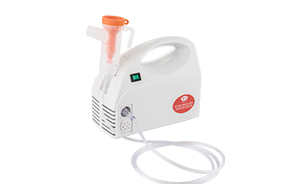 Disposable Bedside Oxygen Humidifier Bottle with Flow SettingWhen oxygen flows above about 4 L/min, unhumidified gas dries the nasal mucosa and causes soreness or nosebleeds. This disposable unit combines humidification with a visible flow setting, letting caregivers confirm the rate at a glance and swap bottles between patients.View Product → keeps humidification and the visible flow setting in one disposable unit at the bedside, which also makes it easier for staff or family caregivers to confirm the rate at a glance and swap the bottle between patients.
On a portable or backup cylinder there is no ward piping: the regulator is the device that both reduces pressure and sets the flow rate. A medical oxygen cylinder is charged to a high storage pressure — commonly on the order of 10–15 MPa — and the regulator drops that pressure to a safe working level while a control knob meters the outlet in liters per minute. Two-stage designs hold the set flow steadier as cylinder pressure falls during use, which matters for patients who depend on cylinders overnight or as a backup to a primary supply.
The arithmetic is unforgiving. A 4-litre cylinder charged to 10 MPa holds roughly 400 liters of gas at atmospheric pressure, so at 2 L/min it lasts a little over three hours of continuous flow — and at 4 L/min, about one hour and forty minutes. Buyers who estimate runtime at the wrong flow rate systematically undersize their cylinder inventory. Since cylinders are never run to empty, realistic planning should also subtract a safety reserve from nominal capacity.
For buyers building a cylinder program, the regulator and its flow dial are the component patients interact with most, which is why models like the Medical Oxygen Cylinder Regulator with Flow Control DialCylinders store oxygen at high pressure, and the regulator both reduces it to a safe working level and meters flow in liters per minute. Since patients interact with this dial most often, models with clear, stable flow control are worth specifying for cylinder programs.View Product → are specified with clear, stable flow control in mind. To understand the pressure stages and safety checks behind these devices, the guide to how a medical oxygen cylinder regulator works walks through the mechanism in detail.
In piped medical gas systems, the wall flow meter is the last calibrated component before the patient. Mounted on the bedhead terminal unit, a Thorpe-tube meter uses a floating ball to indicate flow on a 0–15 L/min scale, and nursing staff adjust it with a needle valve or click-style dial. Its accuracy depends on the inlet pressure it was calibrated for, so a meter connected to a line at a different working pressure can read high or low even when the ball looks perfectly steady.
Procurement teams should check three things before ordering. Terminal connection standards differ by market — British (BS), German (DIN), and Jap/GB terminals are not interchangeable — and a meter ordered with the wrong probe simply cannot be installed. Tube quality matters equally: a scratched tube or a ball that sticks at low flow readings produces silent errors that no one notices at the bedside. We manufacture wall-mounted meters such as the Wall-Mounted Thorpe-Tube Oxygen Flow Meter 0-15 L/minMounted on bedhead terminal units, a wall flow meter is the last calibrated component before the patient, and its accuracy depends on matching the terminal standard and inlet pressure. Verifying measured flow against set flow helps catch drifting valves and tube faults.View Product → for exactly this environment and match terminal standards to the destination market. For a deeper comparison of meter types and selection criteria, see how to choose the right wall flow meter for a medical oxygen supply.
Flow rate is one of the few therapy parameters that can be verified with inexpensive instruments, yet verification is often skipped. During commissioning and scheduled maintenance, hospital engineering teams test outlets and track line pressure with dedicated equipment — gas pressure monitor boxes such as the DY-QYJ-2 and DY-QYJ-3, and oxygen flow decompression instruments like the DY-400, exist precisely for this stage. A ward that documents measured flow against set flow catches drifting valves, cracked tubes, and undersized supply lines before they affect patients.
For buyers assembling a supply chain around accurate oxygen delivery, the working checklist is short:
None of these steps demands advanced equipment on its own; they require that every component between the gas source and the patient — cylinder valve, regulator, flow meter, gas outlet, humidifier — is specified for the flow rate the therapy actually calls for. That has been the core of our product range since 1987, and it remains the most reliable way to make sure the number on the dial is the therapy the patient receives.
 English
 No. 16-18 Dongpu Village, Simen, Yuya, Zhejiang, China
 0086-574-62134031