
 0086-13958366031
 0086-13958366031
A medical gas system is much more than a cylinder and a […]
A medical gas system is much more than a cylinder and a length of tubing. It is the complete piped network that carries oxygen, medical air, vacuum and other medical gases from a source of supply to the exact point where a patient or a clinician needs them. When it works well, nobody thinks about it. When it does not, the whole ward notices within minutes.
That is why the subject rewards a little patience. This guide looks at what a medical gas system actually contains, the gases it handles, how pressure and flow are managed from cylinder to bedside, and the practical points engineers, distributors and hospital teams check before they specify components.
International standards such as ISO 7396-1 treat an installation as a chain of functional blocks rather than a single product. In everyday language, that chain usually looks like this:
Around those four blocks sits a layer of practice that matters just as much: cylinder management and stock rotation, a permit-to-work system for anything done on live pipework, planned maintenance, staff training and written procedures. Hardware is only half of a safe system.
Most people picture oxygen when they hear the phrase, but a modern installation usually handles several gases and services at once. Each one has its own handling rules, its own terminal and its own place on the designer's checklist.
| Gas or service | Typical use | Handling notes |
|---|---|---|
| Oxygen | Respiratory therapy, anaesthesia, resuscitation | Supports combustion; pipework must be clean and free of oil or grease |
| Medical air | Ventilators, gas mixing, driving surgical tools | Must be clean, dry and delivered at a stable pressure |
| Vacuum | Airway clearance, wound drainage, theatre suction | Designed and tested to the same discipline as a breathing gas |
| Nitrous oxide | Analgesia and anaesthesia | Stored as a liquid; needs careful pressure control |
| Nitrogen | Driving instruments, purging lines | Never intended for patient breathing |
| Carbon dioxide | Insufflation during laparoscopic procedures | Requires a dedicated, clearly labelled terminal |
These gases share pipework principles but not personalities. Oxygen supports combustion, medical air and vacuum must be dry and stable, and nitrogen or carbon dioxide have to be routed and labelled so nobody mistakes them for breathing gases.
Not every facility runs a full pipeline, and that is fine. Dental practices, ambulances, small clinics and home care patients often work straight from cylinders, and there the regulator does the heavy lifting. A full oxygen cylinder can hold around 200 bar, and the regulator's job is to reduce that to a stable, adjustable working pressure while the contents slowly fall.
A good regulator is judged on small things: how smoothly the knob moves, whether the set flow holds when the cylinder is nearly empty, and whether the gauges can be read at a glance in a dimly lit room. Safety features matter just as much, including a pressure relief valve, a clear contents gauge and a body that survives daily handling. If you want to compare the main styles first, this explanation of what a medical oxygen cylinder regulator is and how it works is a useful starting point.
what a medical oxygen cylinder regulator is and how it works
Regulators also come in different shapes for different jobs: single-stage and dual-stage, preset and adjustable, cylinder-mounted or piped. The right answer depends on where the gas is used and who will be adjusting it.
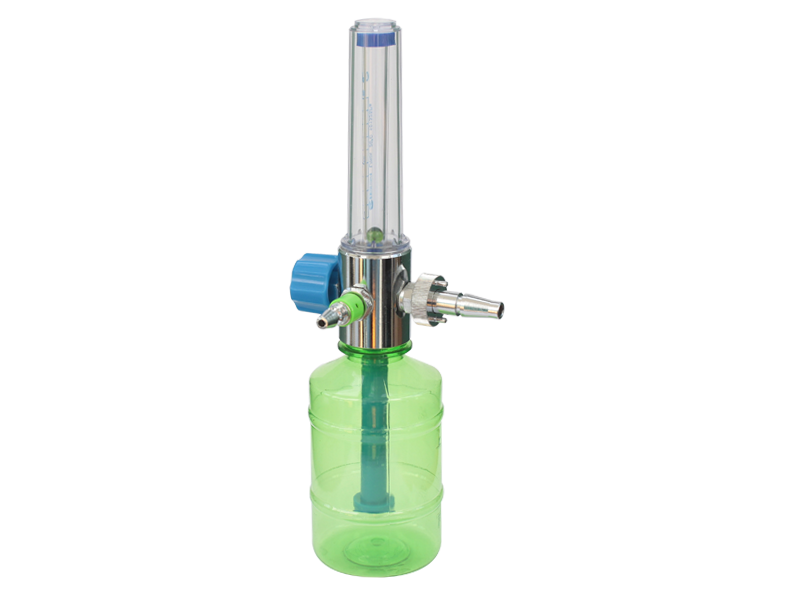
In a piped system the pressure reduction happens upstream, and the ward-level device is usually a wall flow meter. It takes gas from the pipeline outlet, controls the flow with a needle valve and displays it on a graduated scale, often with a humidifier bottle in line so the oxygen does not dry the patient's airway.
Nurses adjust these devices dozens of times a shift, so human factors decide the design. The scale should be readable, the flow should hold steady when outlet pressure fluctuates, and the connection must suit the wall terminal exactly. Flow ranges typically run from a fine low setting for neonatal or paediatric use up to 15 L/min or more for adult therapy, and the meter has to stay accurate across that whole span. Our note on how to choose the right wall flow meter for medical oxygen supply covers those variables in more detail.
how to choose the right wall flow meter for medical oxygen supply
Between the pipeline and the flow meter sit the parts nobody sees: isolation valves for section shutdown, service valves for maintenance and the fittings that join the assembly together. These small components are where leaks usually start, so they deserve the same attention as the visible equipment.
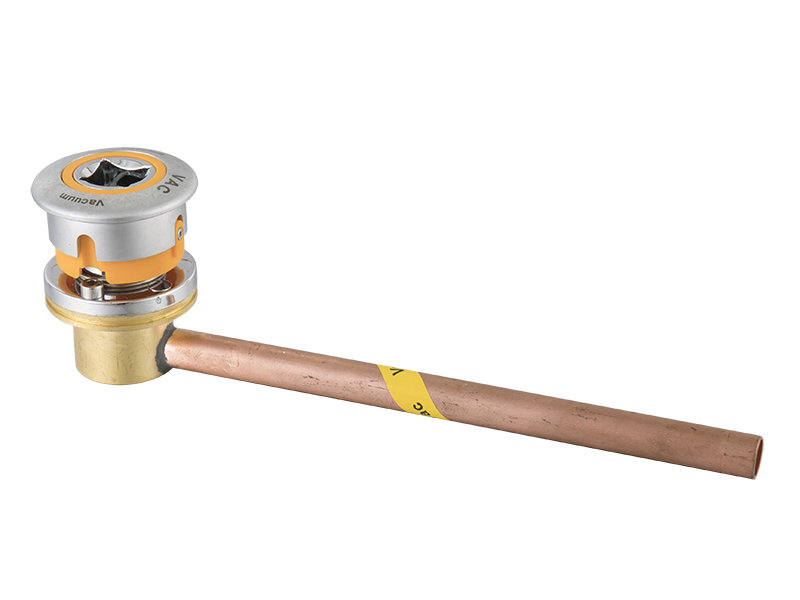
The terminal unit is the meeting point between the building and the equipment. Its most important feature is not its faceplate but its connector: gas-specific probes, pins and threads that make it physically difficult to plug an oxygen flow meter into a vacuum outlet. British, German and Japanese standards each define their own terminal geometry, which is why a project specification normally names the standard rather than just the gas.
| System part | Function | Points to verify |
|---|---|---|
| Source of supply | Stores or generates the gas | Capacity, reserve, changeover, purity |
| Pipeline | Moves gas to the point of use | Material, isolation valves, labelling, pressure drop |
| Terminal unit | Provides the connection point | Connector standard, lockout, mounting |
| Regulator | Reduces and stabilises pressure | Inlet rating, output range, relief valve, gauge accuracy |
| Flow meter | Measures and controls flow | Flow scale, accuracy, humidifier compatibility |
| Monitoring | Warns of pressure deviation | Alarm thresholds, backup power, calibration |
Colour is the second layer of identification, and it is the layer that causes the most confusion. National codes and the ISO approach assign colours differently, and the same colour can mean different gases in different regions, so a faceplate that reads as vacuum in one hospital can look like oxygen to an engineer trained elsewhere. Treat colour as a helpful confirmation, never as proof. Labels, connector shape and documented commissioning records are what actually keep a system safe.
A medical gas system is a life-support service, and maintenance planning treats it that way. Two kinds of checking run in parallel: the daily, human kind and the periodic, instrumented kind.
Pressure monitoring boxes and dedicated test instruments make this work easier. A monitoring box on a branch line gives maintenance staff a local reading without opening a panel, and a flow and decompression instrument turns a vague complaint about weak flow into a measured number.
Component selection is where a good installation is won or lost, and most of the questions are practical rather than theoretical.
Answer those questions honestly and most specification arguments disappear before they start.
No. A concentrator is a source device that produces oxygen from room air. A medical gas system is the distribution side: pipework, valves, terminals, alarms and the equipment attached to them.
Local rules set the legal rhythm, but as a working minimum: daily visual checks, annual verification of terminals and alarms, and full commissioning after any change to pipework.
Often, yes. Terminals, flow meters and regulators can be adapted for a particular connector standard, flow range, gauge layout or branding, as long as safety performance is not compromised.
We have been making medical gas equipment in Yuyao, Zhejiang since 1987, and over that time we have learned that the most useful thing a manufacturer can offer is not a longer catalogue but a straight answer. Our range covers oxygen regulators, wall flow meters, gas outlets, oxygen valves, cylinders, humidifier bottles, suction regulators and gas pressure monitoring equipment, built for buyers, distributors, contractors and OEM partners who want a factory they can talk to directly.
We work to ISO 13485 quality management, our nebulizers carry CE certification, and our products ship mainly to the Middle East, Southeast Asia and other export markets. If a project needs something that is not quite standard, our engineering team can develop it from a drawing or a sample, and an annual capacity of more than 200,000 sets means volume enquiries are welcome too.
If you are comparing specifications, send us the terminal standard, pressure range and flow range you are working with. That is usually enough for us to say within a day whether we have something off the shelf or something we would build for you.
 English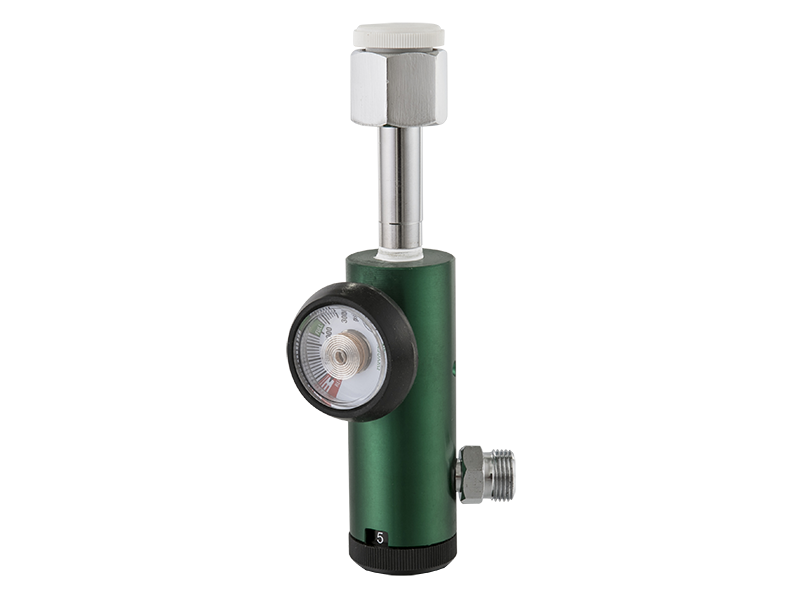
 No. 16-18 Dongpu Village, Simen, Yuya, Zhejiang, China
 0086-574-62134031