
 0086-13958366031
 0086-13958366031
Reading an oxygen flow meter looks simple until you are […]
Reading an oxygen flow meter looks simple until you are standing at a bedside, a wall outlet, or a cylinder with a clinician waiting. The little ball moves, the numbers are small, and the difference between 2 L/min and 4 L/min matters. A calm, repeatable reading habit is what keeps that moment safe.
At Yuyao Dengyue, we have manufactured oxygen regulators, wall flow meters, and related gas equipment since 1987. The same reading mistakes show up again and again, and most of them are not about complicated math. They are about eye level, scale choice, and knowing which part of the device you are actually looking at.
An oxygen flow meter tells you how much oxygen is passing through the device per minute, usually expressed in liters per minute, or L/min. It does not tell you the patient’s oxygen saturation, and it does not replace a prescribed oxygen concentration. Those are separate clinical measurements. The flow meter simply gives you a controlled, visible flow rate.
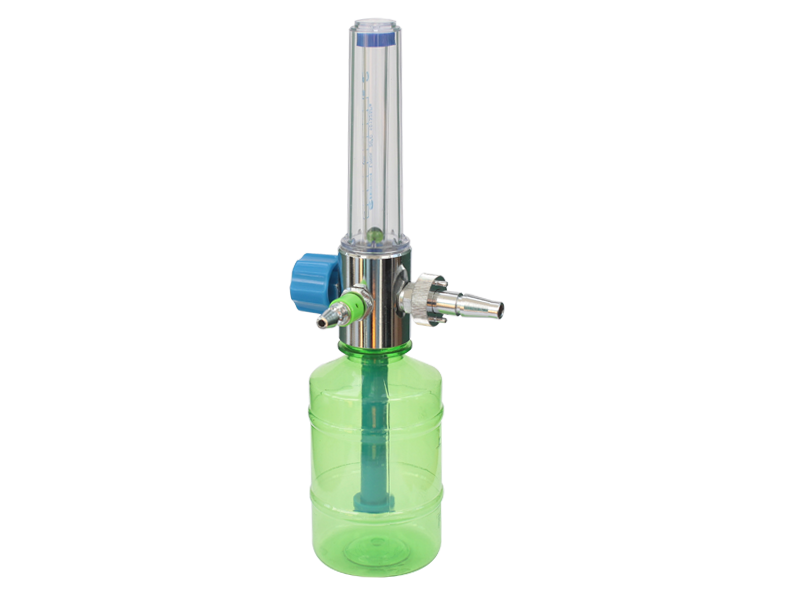
Most clinical flow meters are Thorpe tube devices. Oxygen enters at the bottom, passes upward through a tapered tube, and lifts a lightweight float. The float settles at the point where the upward force of the gas balances its weight. The scale beside the tube turns that height into a flow reading. Because the tube is tapered, the same float can indicate different flows at different heights, which is why the scale and the tube must stay matched.
That is also why a damaged tube, a dirty float, or a cracked outlet can make a flow meter read incorrectly even when the control knob feels normal. The reading is only as trustworthy as the condition of the device.
Before you read the number, identify what you are looking at. A typical oxygen flow meter has a few key parts, and each one affects whether the reading is reliable.
| Part | What it does | What to check |
|---|---|---|
| Inlet or connector | Connects the flow meter to the oxygen source | Secure fit, correct standard, no leaks |
| Control knob | Adjusts the flow rate | Smooth movement, no free spin, no stiffness |
| Thorpe tube | Guides the gas and holds the scale | No cracks, moisture, dirt, or discoloration |
| Float ball | Rises and falls with the gas flow | Free movement, no sticking, no damage |
| Scale | Shows flow in L/min | Correct units, readable numbers, clear zero |
| Outlet or humidifier connection | Delivers oxygen to the patient circuit | Good fit, no kinks, no loose humidifier bottle |
| Pressure gauge, if present | Shows cylinder pressure, not flow | Not confused with the flow scale |
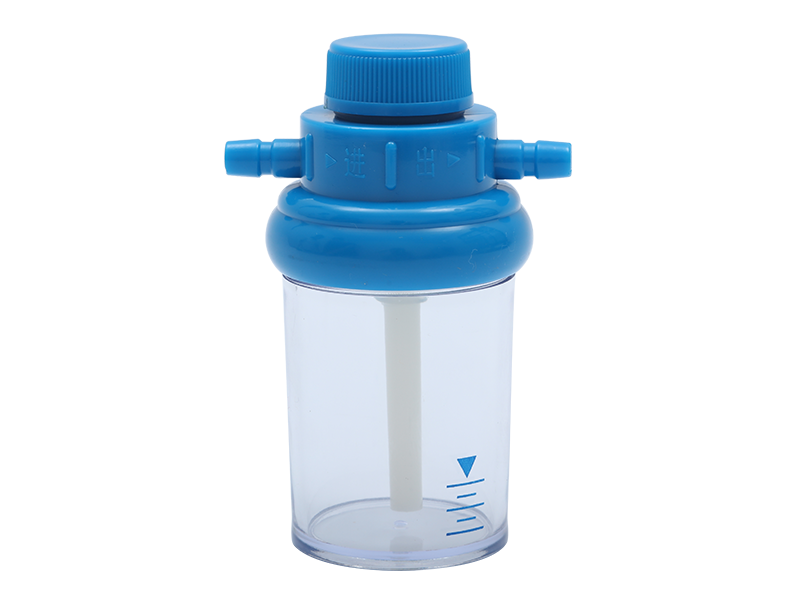
If the outlet is fitted with a humidifier, check that the bottle is seated correctly and that the tubing is not kinked. A loose humidifier connection can change the feel of the adjustment and make the float behave erratically.
The most common reading error is not a calculation error. It is a viewing angle error. If you look down at the float from above, or up from below, the number you see is not the true reading.
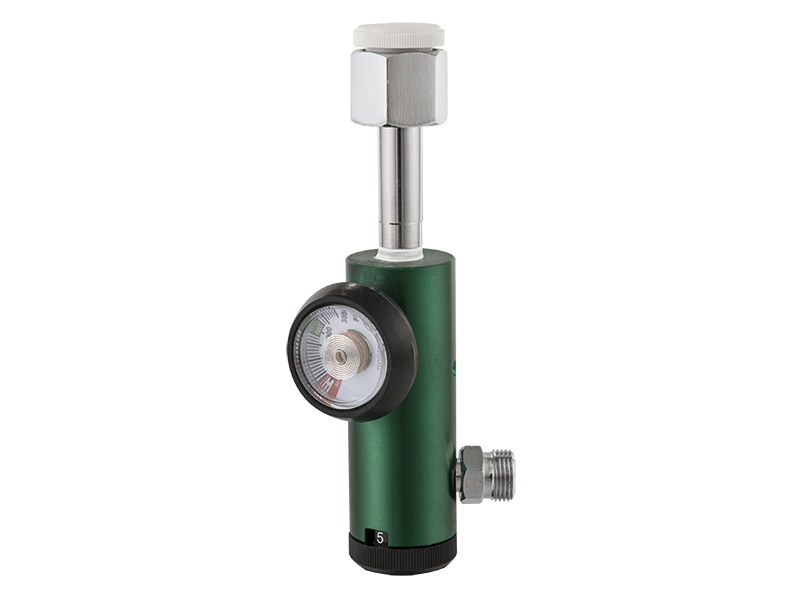
Some regulators use a dial gauge for cylinder pressure, not for flow. The pressure gauge tells you how much oxygen remains in the cylinder. The flow meter tells you how much oxygen is being delivered. Do not read the pressure gauge as liters per minute. They are two different measurements, and confusing them can lead to a serious setting error.
If the flow meter has two numbered columns, read the column that matches your prescription. A dual-scale tube is not an invitation to average the numbers. It is simply two scales for different flow ranges or regions.
None of these mistakes is dramatic on its own, but together they can turn a 2 L/min order into something closer to 3 or 4 L/min. In oxygen therapy, that is not a small difference.
The reading technique is the same, but the setup changes what you check first. A wall-mounted flow meter is usually part of a medical gas outlet system. It should sit securely in the outlet, the scale should face the user, and the humidifier or tubing should hang without pulling on the device.
On a cylinder-mounted regulator, the flow meter may sit on top of the regulator, with the cylinder pressure gauge nearby. Check that the regulator is fully seated and that the cylinder valve is open slowly. If you want a deeper explanation of the regulator side, our article on how a medical oxygen cylinder regulator works walks through the pressure-to-flow path.
For wall systems, the flow meter itself should be matched to the outlet standard and the expected flow range. Our guide on how to choose the right wall flow meter for medical oxygen supply covers that selection process.
If the float will not settle, or the ball sits at zero when the oxygen is on, stop and troubleshoot. Do not tap the tube or force the knob. A flow meter is a precision device, and rough handling can make a small problem worse.
Flow meters are not usually field-calibrated with a screwdriver. If a device has been dropped, exposed to moisture, or repaired with non-approved parts, remove it from service. A reading you cannot trust is worse than no reading at all.
Reading a flow meter well is a small skill, but it protects a very important therapy. Once you build the habit of standing at eye level, reading the center of the ball, and checking the scale before you walk away, the device becomes much easier to trust.
 English
 No. 16-18 Dongpu Village, Simen, Yuya, Zhejiang, China
 0086-574-62134031
