
 0086-13958366031
 0086-13958366031
If a clinician has prescribed “4 LPM oxygen,” that smal […]
If a clinician has prescribed “4 LPM oxygen,” that small number carries a lot of practical weight. It tells you how much continuous oxygen should flow through the tubing each minute, and it shapes the regulator, flow meter, cylinder, and accessories you need. At our factory in Yuyao, we have spent decades building and supplying oxygen regulators, flow meters, cylinders, and humidifiers, and we have learned that the most useful answers are usually the plain ones. This guide explains what 4 LPM means, how long cylinders may last, and how to choose equipment that matches the prescription without overcomplicating the setup.
LPM stands for liters per minute. A 4 LPM setting means the oxygen source should deliver about four liters of gas every minute through the flow outlet. It is a measure of volume, not a measure of oxygen purity. A cylinder with a regulator may deliver nearly pure oxygen at that flow, while a concentrator may deliver oxygen-enriched air at a stated concentration. Both can be described as “4 LPM oxygen,” but they are not automatically interchangeable.
It also helps to know that 4 LPM is a continuous-flow setting. If you see a portable concentrator with a “4” setting, read the manual carefully. Many pulse-dose devices deliver a small bolus when you breathe in rather than a steady four liters every minute. For a prescription written as continuous 4 LPM, the equipment must be able to sustain that flow during sleep, exertion, and rest. When in doubt, ask the prescriber or equipment provider to confirm the mode, not just the number.
Runtime depends on how much oxygen is stored in the cylinder and how much of it can be used safely. The rough formula is simple: free oxygen in liters divided by 4 LPM gives minutes of flow. A cylinder’s free oxygen is approximately its water capacity multiplied by its fill pressure. For a quick estimate, a 4-liter cylinder filled to 150 bar contains about 600 liters of free oxygen, which is about 150 minutes at a continuous 4 LPM flow.
| Cylinder water capacity | Approximate free oxygen at 150 bar | Continuous flow time at 4 LPM |
|---|---|---|
| 2 L | 300 L | About 1 h 15 min |
| 4 L | 600 L | About 2 h 30 min |
| 10 L | 1,500 L | About 6 h 15 min |
These numbers are planning estimates, not promises. Gauges, fill pressure, temperature, residual pressure, and the regulator’s accuracy all affect real runtime. Never try to squeeze the last bit of pressure out of a cylinder; follow the supplier’s guidance and your clinician’s emergency plan. If you are selecting a regulator for cylinder use, our guide to medical oxygen cylinder regulators explains the common types and safety points.
This is one of the most common points of confusion. Continuous flow is measured in liters per minute. Pulse-dose settings are often numbered to match approximate continuous-flow performance, but the number is not a guarantee of four liters per minute. A pulse-dose device releases oxygen only during inhalation, so the average flow depends on breathing rate and device design. If a prescription says continuous 4 LPM, using a pulse-dose setting labeled “4” may not meet the requirement.
There is also the question of oxygen concentration. A cylinder system delivers the gas stored in the cylinder through a regulator and flow meter. A concentrator pulls in room air and concentrates oxygen, and its output can vary by model, flow setting, and maintenance. For either system, the flow meter is the part that tells you what is actually leaving the outlet. That is why a clear, easy-to-read flow meter matters as much as the oxygen source itself.
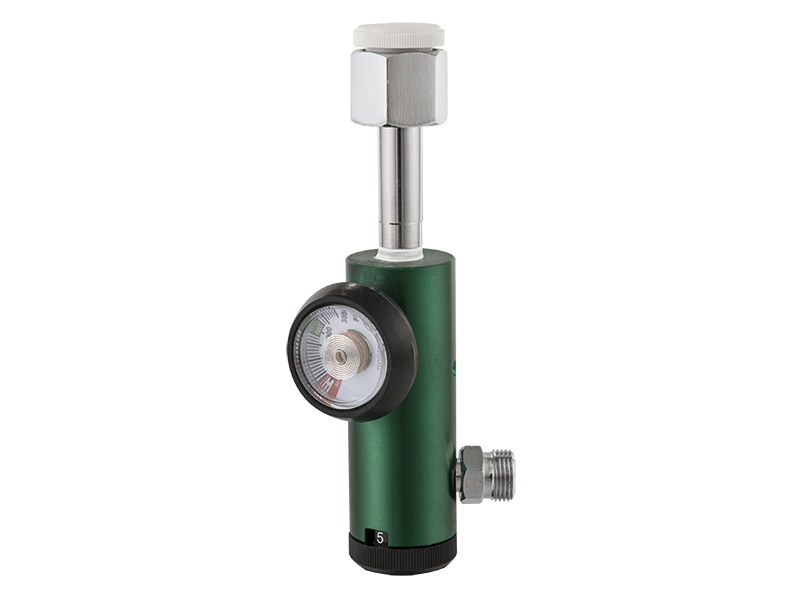
For a cylinder-based setup, the regulator reduces high cylinder pressure to a safe working pressure and lets you set the flow. A 4 LPM prescription is usually well within the range of a standard 0–15 LPM oxygen regulator, but check the outlet style, pressure rating, and flow scale before you buy. The flow scale should be easy to read, and the knob should adjust smoothly without jumping from a low flow to a much higher one.
Our DY-540 oxygen regulator is one example of a cylinder regulator built for everyday medical gas use. It is not the right choice for every cylinder or every market standard, but it shows the kind of details worth comparing: inlet connection, outlet fitting, gauge clarity, and the flow range. If you are sourcing for a clinic, distributor, or home-care program, ask for the matching cylinder valve and outlet standards so the regulator, tubing, and humidifier fit together properly.
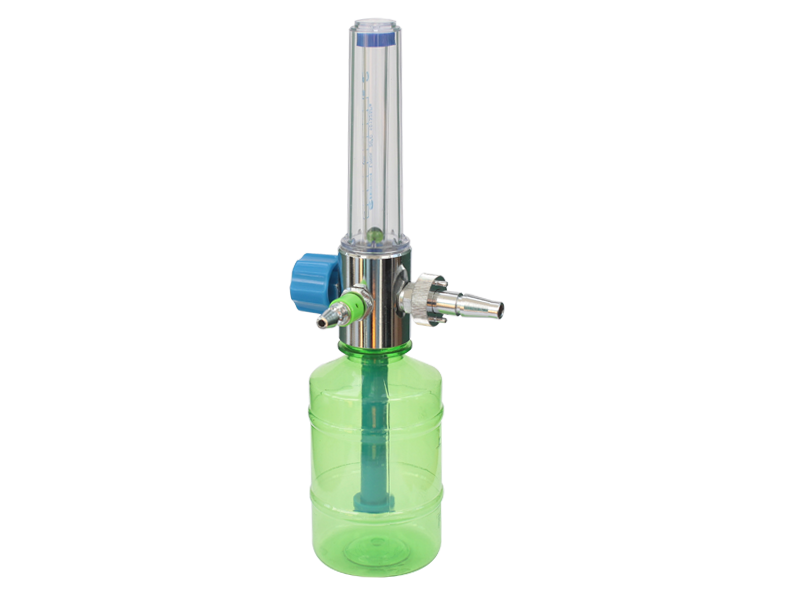
Not every 4 LPM prescription is served by a cylinder. Hospitals, clinics, and some long-term care buildings use piped oxygen systems with wall outlets. In that setting, a wall-mounted flow meter controls and displays the flow at the bedside or treatment point. The flow meter must match the gas outlet standard used in the building, and the scale should cover the prescribed range with enough precision to set 4 LPM confidently.
Our wall-mounted medical oxygen flow meter DY-A1 is designed for that kind of terminal use. When comparing wall flow meters, look beyond the shape of the body: check the inlet standard, the flow range, the readability of the scale, and whether the unit is suitable for the gas and pressure in the system. Our article on how to choose the right wall flow meter goes deeper into those selection points.
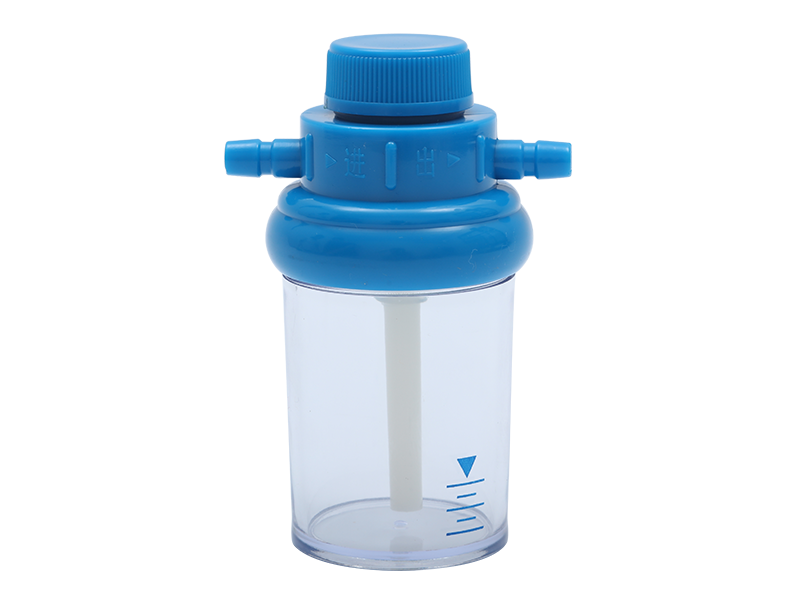
At 4 LPM, some patients notice dryness or irritation in the nose and throat, especially in dry rooms or during longer use. A humidifier bottle can add moisture to the oxygen before it reaches the cannula. Not every patient needs one, and the decision should come from the prescriber or care team. If a humidifier is used, it must be compatible with the flow meter or regulator outlet, and the water level must be kept within the marked range.
Our disposable oxygen humidifying bottle with flow is one option for that part of the circuit. The important word is “fit”: the bottle, tubing, and cannula should connect securely without adapters that can leak or disconnect. Tubing length also matters. A very long tube can add resistance and make the flow feel weaker at the cannula, while a tube that is too short can pull on the patient or the equipment. Keep the path simple, supported, and free of kinks.
Before turning the flow to 4 LPM, check the basics. Confirm the cylinder or wall outlet is oxygen, not medical air or another gas. Inspect the regulator, flow meter, tubing, and humidifier for cracks, moisture, or missing seals. Set the flow with the ball or indicator at the correct line, not between lines. Then check that oxygen is actually flowing at the cannula. A quiet regulator does not always mean the gas is moving.
If the patient feels breathless, confused, or unusually sleepy at 4 LPM, do not simply turn up the flow without advice. Contact the clinician or emergency service. Oxygen is a treatment, and the correct flow is the one that meets the prescription and the patient’s condition, not the one that looks convenient on the gauge.
Whether you are setting up a single home cylinder or specifying equipment for a clinic, a 4 LPM oxygen prescription is a practical starting point for matching the source, regulator, flow meter, humidifier, and tubing. The goal is not to buy the most complicated setup. It is to make sure the flow is accurate, the connections are safe, and the patient or caregiver can use the equipment confidently.
As a manufacturer of medical gas equipment, we like questions that start with the real use case: Is the source a cylinder or a wall outlet? Is the flow continuous? Who will set it? Who will check it? Once those answers are clear, the equipment list becomes much simpler. If you are comparing regulators, flow meters, or humidifier bottles for a 4 LPM oxygen program, we are happy to help you check the fit and the standards for your market.
 English
 No. 16-18 Dongpu Village, Simen, Yuya, Zhejiang, China
 0086-574-62134031
