
 0086-13958366031
 0086-13958366031
Ask anyone on a hospital maintenance team what keeps th […]
Ask anyone on a hospital maintenance team what keeps them awake at night, and medical gas rarely tops the list — until a pressure alarm sounds on a weekend shift. Behind the quiet confidence that oxygen, medical air, nitrogen and vacuum will be there the moment a clinician reaches for them sits a fairly small group of professionals: medical gas verifiers. We have been building the components that make up those systems since 1987, and from the shop floor we have watched how a thorough verification protects everyone downstream — patients, nurses, and the maintenance staff who sign the logbook.
A medical gas verifier is the independent specialist who performs the standardized tests and inspections that confirm a medical gas system performs exactly as designed: the correct gas at every outlet, the correct pressure and flow, the correct alarm response, and no possibility of cross-connection between systems. The work is part measurement, part documentation, and part judgement — because a verifier has to decide whether a reading that sits just inside tolerance is a pass or a problem waiting to happen.
Verification is not the same job as installation. The crews who braze and install piping hold their own credentials, and they are accountable for building the system. The verifier arrives afterward, with no stake in the installation, and documents whether the finished system meets the governing code and the facility's design drawings. On most projects the verifier is the last person to sign before a patient is ever connected to a wall outlet.
That independence is the whole point. A verifier who also installed the piping has an obvious conflict of interest, which is why hospitals, contractors and accreditation surveyors all treat third-party verification as a separate line item in the project budget.
Every verifier follows a test protocol defined by the applicable code and the project specifications, but the checks tend to fall into predictable families. The table below shows the common ones and the hardware they exercise.
| Check | What It Confirms | Components Involved |
|---|---|---|
| Pressure and leak test | The piping holds pressure without measurable loss | Piping, zone valves, regulators |
| Cross-connection test | Each outlet delivers only the gas it is labeled for | Gas outlets, terminal units |
| Flow accuracy check | Indicated flow matches delivered flow across the range | Wall flow meters, humidifiers |
| Outlet flow and pressure drop | The terminal delivers rated flow at the rated pressure | Gas outlets, adapters, fittings |
| Alarm and monitoring response | Alarms trigger at the correct thresholds | Pressure monitor boxes, master alarms |
| Purity and dew point | The gas itself meets medical-grade limits | Source equipment, manifolds |
| Zone valve operation | A zone can be isolated quickly and completely | Oxygen valves, service valves |
Most of these checks are witnessed and recorded in real time. The finished report becomes part of the facility's compliance file, and it is usually the first document a surveyor or a new maintenance manager asks to see.
Facilities and contractors generally look for a recognized verifier credential — the 6030 designation is the common reference point in the United States — but the underlying requirements across programs look remarkably similar.
Candidates usually need a documented record of hands-on work in medical gas verification, often at least two years of it, plus a set number of formal training hours; twenty-four hours is a common figure for related inspector credentials. That mix matters more than it sounds. Classroom time teaches the code language, while field time teaches what a marginal outlet actually feels like when you connect a test gauge to it.
Certification is granted after a written exam, and passing thresholds in the seventy percent range are typical. The credential is time-limited — three years is standard — after which the verifier must recertify, usually by documenting continuing work and completing refresher training. If you are hiring a verifier for a project, ask for the current card and check the expiry date rather than trusting a name on an old report.
The trigger points are more predictable than most people expect:
Smaller clinics sometimes ask whether they can skip verification after a minor change. The honest answer, based on every code we have worked with, is no: once the system has been opened, it has to be tested again and the result documented.
Start at the wall. A gas outlet is a small part with a large job — it has to accept only the correct probe, hold pressure, and deliver the rated flow without leaking. Our English terminal series built to the BS pattern, the German DIN terminals, and the Jap-standard terminals are machined so that cross-connection and flow tests land inside tolerance the first time rather than the third.
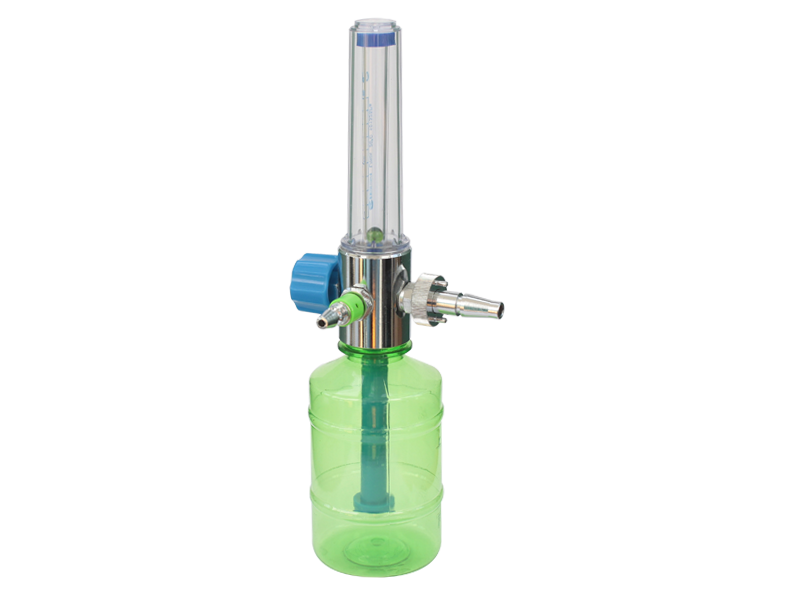
Flow meters are where accuracy becomes visible to everyone, including the nurse who reads one at 3 a.m. A wall-mounted flow meter has to indicate honestly across its whole range, not just at the setting someone checked during commissioning. We wrote a practical guide on choosing the right wall flow meter for medical oxygen supply that covers the questions contractors ask us most often.
Away from the wall, oxygen regulators and cylinder regulators do the pressure work, while zone valves decide what can be isolated during an emergency. Both are the kind of part that behaves perfectly on a bench and then behaves differently after two years of ward use, which is why we keep the tolerances conservative. Our notes on regulator types, selection guidelines and safety precautions go into that trade-off in more detail.
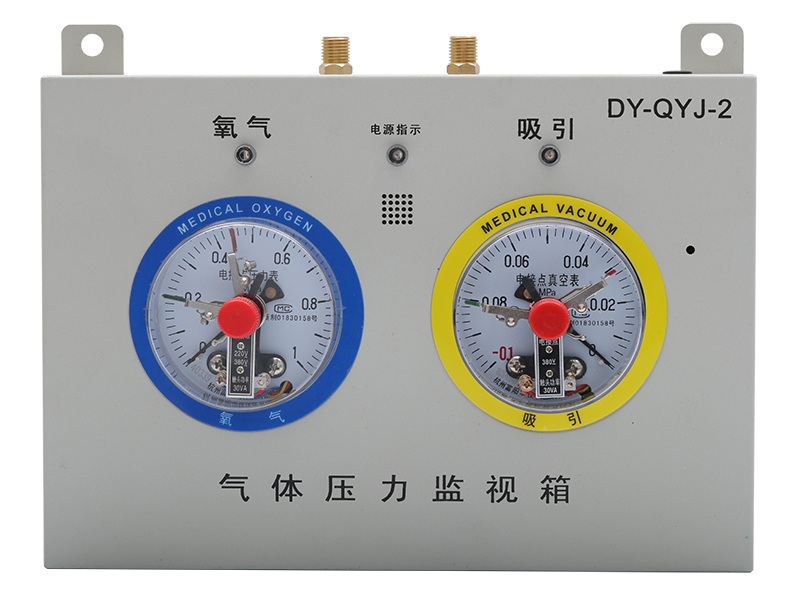
Verification also leaves instruments behind that keep watching after the verifier drives away. Our detect-system range includes gas pressure monitoring boxes for medical gas systems and an oxygen flow and decompression instrument, so a facility can keep an eye on pressure trends between formal inspections instead of discovering a slow drift at the next one.
A verification visit goes better when the facility has done a little preparation. From the supplier side, these are the five things that most often slow a project down:
A verification is only as good as the parts it measures. A perfectly documented report on a flow meter that drifts, or an outlet that weeps at the seal, does not protect anyone — it just moves the problem to the next shift. That is why we still build in Yuyao the way we did when the company started: standard models where they make sense, custom work where a project calls for it, and testing before anything leaves the floor.
We have been manufacturing medical gas equipment since 1987, with ISO 13485 certification and CE certification on our nebulizer line, an annual capacity of more than 200,000 sets, and a long export record across the Middle East, Southeast Asia and beyond. If you are a contractor, distributor or facility team working through a verification project, send us your drawings or a sample and we will tell you honestly what we can make and what we would not recommend. That conversation usually saves more time than any specification sheet.
 English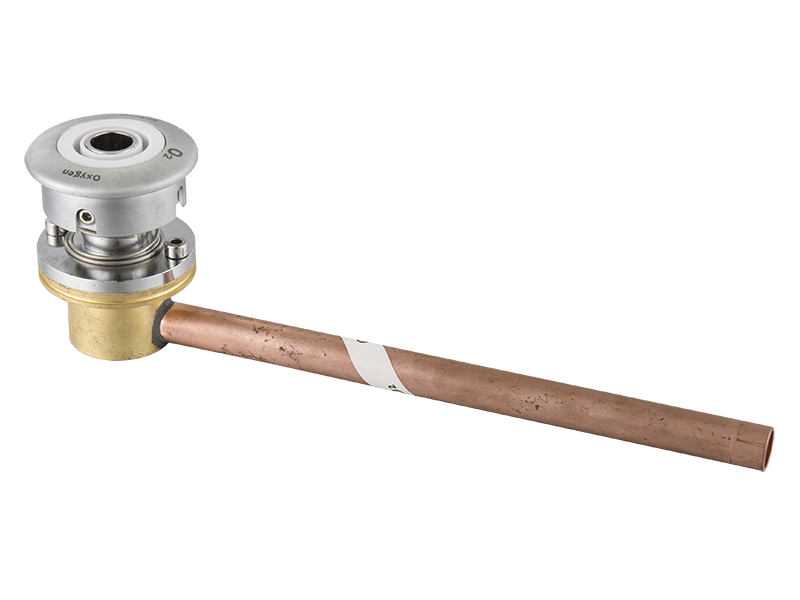
 No. 16-18 Dongpu Village, Simen, Yuya, Zhejiang, China
 0086-574-62134031