
 0086-13958366031
 0086-13958366031
If you have spent time looking into NFPA 99 medical gas […]
If you have spent time looking into NFPA 99 medical gas certification, you have probably noticed that the same phrase describes at least three different things: a credential held by a technician, a third-party verification of a completed pipeline system, and a facility's ongoing duty to keep that system safe and documented. All three matter, and mixing them up is one of the most common sources of confusion during a construction project, a renovation, or survey season.
The document behind all of it is NFPA 99, the Health Care Facilities Code. Chapter 5 of that code addresses gas and vacuum systems, and it drives what gets installed, who is allowed to work on it, and how the finished system is proven to function before a patient depends on it. What follows is a practical map of the certification landscape, written by people who build the equipment that sits at the patient end of those systems.
When a specification says "medical gas certification," it usually refers to one of these:
NFPA 99 does not certify anyone by itself. It sets the qualification and performance criteria; credentials are issued by organizations that examine people against those criteria, and verification is carried out by a party the facility engages for that purpose.
In the United States, the credentials most often written into project specifications are the ASSE 6000-series medical gas certifications. They are role-specific, which is why a single project usually needs several of them present at different stages:
| Credential | Designed for | Typical role on a project |
|---|---|---|
| ASSE 6010 | Installers | Brazing and installing piped medical gas and vacuum systems |
| ASSE 6020 | Inspectors | Inspecting installation work as construction proceeds |
| ASSE 6030 | Verifiers | Independent third-party verification before commissioning |
| ASSE 6040 | Instructors | Training and qualifying other personnel |
| ASSE 6050 | Maintenance personnel | Ongoing maintenance of a system already in service |
The detail that catches people out is independence. For a Category 1 piped system, meaning one that serves patients who would be harmed by a loss of gas supply, verification is expected to be performed by an entity other than the installer. A crew cannot sign off on its own work, so a compliant project generally needs at least two credentialed parties.
Verification is not a single inspection. It is a sequence of tests, each producing a record, and the code requires the system to be shown to be clean, leak-free, correctly connected, and performing within tolerance. The usual path looks like this:
The code sorts health care facilities into risk categories, from Category 1 downward, and the testing burden scales with the category. The principle stays the same at every level: if it was tested, it should be written down and kept.
Newer editions of NFPA 99 have pushed more of the responsibility toward the facility itself. The 2021 edition strengthened expectations around governance of medical gas systems: designating a responsible facility authority for the system, working under a permit-to-work system before anyone opens or modifies a live line, and meeting updated requirements for the emergency oxygen supply connection. Later editions continue in that direction, emphasizing qualified people managing and maintaining the system rather than treating commissioning as the finish line.
In practice, that means an annual evaluation of the system, a maintenance schedule, records of cylinder and regulator checks, and a named person who can answer questions during a survey. Certification, in this sense, is less a certificate than a habit.
Verification tests hardware, so hardware has to be built for testing. Outlets, zone valves, flow meters, regulators, and alarm components installed in a health care facility are expected to be suitable and approved for medical gas service and to be traceable to a documented part number. When a surveyor asks you to prove it, consistent labeling and documentation make that conversation short.
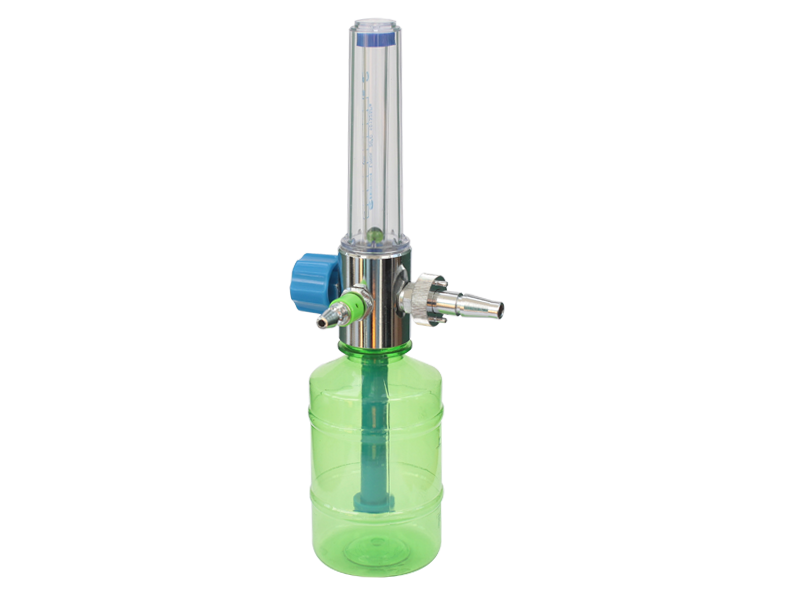
Ward terminal equipment is a good example. A wall-mounted oxygen flow meter like our DY-A1 sits at the bedside end of a piped system, where it has to hold a stable flow, read clearly, and survive years of daily adjustment.
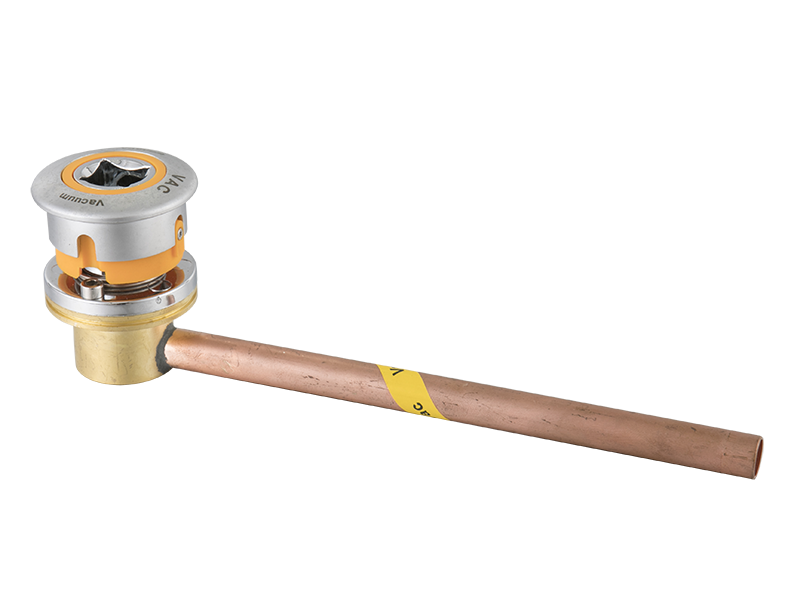
NFPA 99 is a United States code, while most pipeline projects outside North America follow ISO 7396-1 for medical gas pipeline systems. That difference shows up most visibly at the wall. German DIN terminals, British BS terminals, and Japanese style outlets are not interchangeable, and a mismatched outlet will not accept the flow meter or suction equipment that clinical staff already use. That kind of problem tends to surface during commissioning, when it is expensive to correct.
Our gas outlet range covers those regional formats, including German DIN terminals built for pipeline systems that follow the international standard.
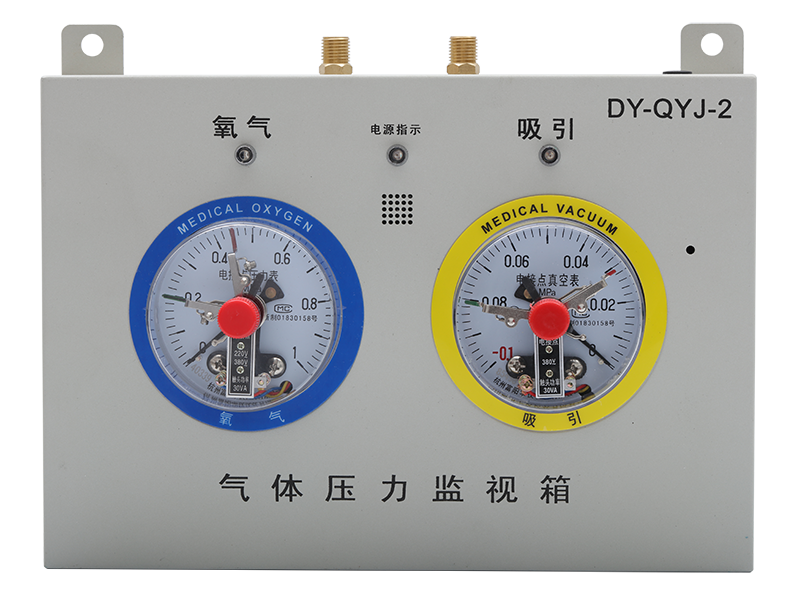
Once a system is verified and in service, the questions change. Is line pressure where it should be? Did the alarm test happen this month? Are the records current? Small local monitoring instruments make those answers easy to find without calling in a contractor for a routine check, and they are useful during the annual evaluation as well.
Our DY-QYJ-2 gas pressure monitoring box was made for exactly that routine, day-to-day view of a medical gas line.
Three questions resolve most of the confusion on a project. Which edition of NFPA 99 has actually been adopted in this jurisdiction? Who is the independent verifier, and when was that party confirmed? And does the documentation for the installed equipment match what is on the wall? Get those right and the certification process becomes predictable instead of stressful.
If you are sourcing components, two of our guides go deeper into the equipment side: choosing the right wall flow meter for medical oxygen supply, and the types, selection guidelines, and safety precautions for medical oxygen cylinder regulators. Both are written for buyers who have to justify a choice, not just make one.
We have been manufacturing medical equipment in Yuyao, Zhejiang since 1987. We hold ISO 13485 certification, our nebulizer line carries CE certificates, and our annual capacity runs above 200,000 units. We build to our own catalog and to customer drawings, and we ship mainly to the Middle East, Southeast Asia, and other international markets. If your project needs outlets, flow meters, regulators, or monitoring instruments that arrive documented and consistent, that is the part of the work we do every day.
NFPA 99 medical gas certification rewards preparation. The facilities that sail through surveys are rarely the ones that did something heroic at the end of a project; they are the ones that kept good records, used qualified people, and installed equipment designed for medical gas service from the start.
 English
 No. 16-18 Dongpu Village, Simen, Yuya, Zhejiang, China
 0086-574-62134031
