
 0086-13958366031
 0086-13958366031
Medical oxygen flow can look reassuringly simple: a flo […]
Medical oxygen flow can look reassuringly simple: a float rises in a tube, and the clinician reads a number. But that number is only useful when the flowmeter is measuring under the conditions it was designed for. A pressure compensated flowmeter is built to keep the reading honest when pressure at the outlet changes.
At Yuyao Dengyue Medical Equipment, we have been manufacturing medical equipment since 1987. Much of our work involves the parts that sit between an oxygen source and the patient: regulators, wall flowmeters, gas outlets, humidifier bottles, and test instruments. That practical experience shapes the questions we ask before recommending a flowmeter. This article explains what pressure compensation does, where it matters, and how to choose, install, and maintain a unit.
A pressure compensated flowmeter measures gas flow while correcting for changes in pressure that would otherwise distort the reading. In medical oxygen service, the device is usually a Thorpe tube flowmeter with a pressure-compensating mechanism. Gas passes through a tapered tube, lifting a float to indicate flow. A needle valve lets the user adjust the flow, and the compensation system helps hold the calibration steady as downstream pressure varies.
A non-compensated flowmeter is typically calibrated with its outlet open to atmosphere. If resistance downstream increases, pressure builds at the outlet. The float may still rise to the same mark, but the actual flow can be lower than the scale suggests. This is the reason a pressure compensated flowmeter is often specified for clinical points where humidifiers, long tubing, or other restrictions are expected.
In a medical flowmeter, compensation is usually mechanical. An internal regulating element responds to pressure changes and maintains a more constant differential pressure across the metering orifice. When outlet pressure rises, the mechanism adjusts to limit the effect on the float. The result is a scale that stays closer to true flow across a defined operating range.
In process and industrial flow measurement, “pressure compensation” often refers to electronic correction. Temperature and pressure sensors feed a transmitter or flow computer, which calculates a compensated flow value. That is a different approach from a mechanical medical Thorpe tube. Both ideas share the same goal, but the medical device is designed for direct, local oxygen delivery and clinical readability rather than process control.
Oxygen delivery is rarely a straight pipe. Gas may pass through a humidifier, long tubing, a nebulizer, a ventilator circuit, or a wall outlet with a modest pressure drop. Each item adds resistance. When resistance changes, a standard flowmeter can drift away from the scale, especially at lower flow settings where small errors matter.
Without compensation, a flowmeter set to 8 L/min might deliver noticeably less than 8 L/min at the patient end. The clinician may then adjust therapy based on a displayed value that is no longer true. That is not just a technical inconvenience. It can make oxygen delivery harder to document, harder to reproduce, and harder to compare between beds or departments.
Compensation is especially useful in wall-mounted installations, cylinder-based oxygen therapy, humidified oxygen, and systems where the downstream resistance is not fixed. It also helps when a flowmeter is used with different accessories over time. The reading remains more dependable because the device is responding to pressure, not ignoring it.
The classic Thorpe tube is vertical. Gas enters at the bottom and flows upward through a tapered bore. A float settles at a height where the upward gas force balances its weight. The tube is marked in liters per minute. A control valve, usually at the inlet or outlet depending on the design, adjusts the flow.
The compensation mechanism is the part that makes the difference. It maintains a nearly constant pressure differential across the metering element. If the outlet pressure rises because a humidifier is attached or the tubing is restricted, the mechanism compensates rather than letting the float’s relationship to flow drift. The scale is calibrated for the intended gas and pressure conditions, so the user can read flow directly.
The float indicates flow at the calibration conditions. It does not tell you the oxygen concentration delivered to the patient, and it is not a substitute for an oxygen analyzer when concentration matters. It also does not replace a pressure regulator or a pipeline pressure alarm. A pressure compensated flowmeter is a measuring and control device for flow, not a complete oxygen delivery system.
The right choice depends on the installation. A non-compensated unit can work well where the outlet is open, the downstream resistance is stable, and the clinical team understands the calibration conditions. A compensated unit is more forgiving when pressure changes are expected.
| Feature | Pressure compensated flowmeter | Non-compensated flowmeter |
|---|---|---|
| Response to backpressure | Maintains a more stable reading across its rated range | Reading may drift when outlet resistance increases |
| Best use | Wall outlets, humidified oxygen, long tubing, variable accessories | Stable, open outlet conditions with limited downstream resistance |
| Calibration approach | Verified with representative outlet pressure and gas service | Typically calibrated with outlet open to atmosphere |
| Clinical documentation | Flow setting is easier to reproduce across similar setups | Staff should understand when the scale may not reflect delivered flow |
| Complexity and cost | Higher, because of the compensating mechanism | Lower and simpler in suitable applications |
A medical oxygen system usually follows a chain: source, pressure regulation, piping or hose, flowmeter, humidifier, delivery tubing, and patient interface. Each part has a job. The regulator reduces high cylinder pressure to a usable level. The wall outlet provides a standardized connection. The flowmeter controls and indicates flow. The humidifier adds moisture when needed, and the tubing carries gas to the patient.
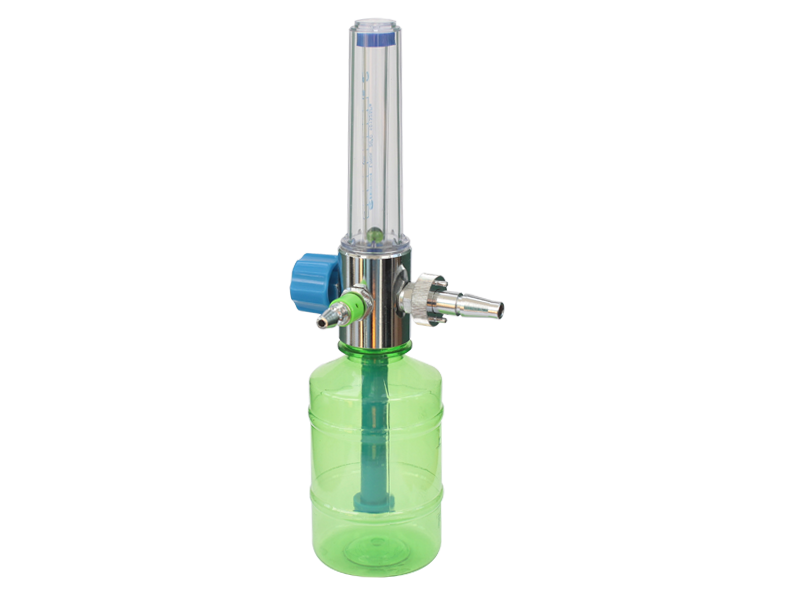
For wall-mounted installations, our DY-A1 wall-mounted medical oxygen flow meter is designed for this part of the system. It is a practical example of how a flowmeter can be integrated into a bedside or ward oxygen point rather than mounted directly on a cylinder.
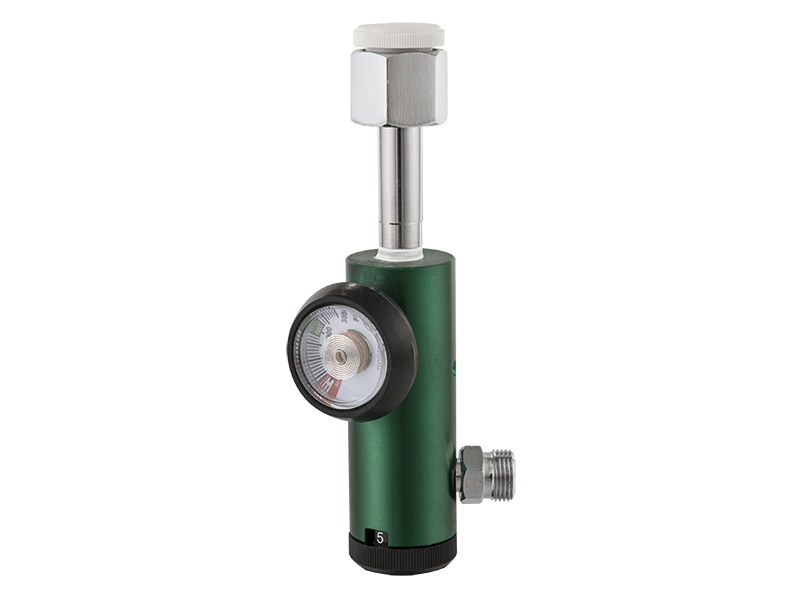
On cylinders, the regulator performs the first pressure reduction while the flowmeter controls delivery. Our DY-540 oxygen regulator is one option for cylinder-based setups, and it can be paired with an appropriate flowmeter and humidifier according to the clinical requirement.
If you are comparing wall units, this guide on choosing the right wall flow meter for medical oxygen supply walks through the main selection points. For cylinder systems, this article on medical oxygen cylinder regulators explains the pressure and safety side of the chain.
A good selection process starts with the installation, not the catalog page. Write down the gas, the inlet pressure, the expected outlet resistance, the flow range, and the connection standard. Then compare those details with the flowmeter’s stated operating conditions.
There is no benefit in choosing a compensated unit for every point if the installation is stable and the simpler device is properly understood. The better approach is to match the device to the risk of pressure variation and to the way the clinical team will use it.
Correct installation protects both accuracy and safety. Follow the manufacturer’s orientation, pressure, and connection requirements. Keep oxygen equipment free from oil, grease, and incompatible lubricants. Use only trained personnel for installation and service.
Calibration should reflect the conditions in which the flowmeter will be used. A unit used with a humidifier or long tubing should be checked with a representative outlet condition, not only with the outlet fully open. Verify the reading at several points across the scale and document the results according to your quality system.
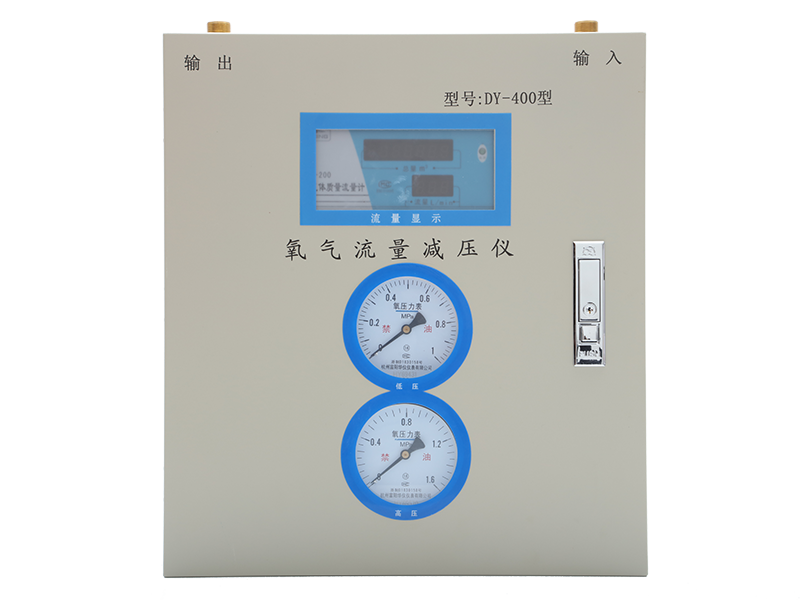
For commissioning, maintenance, or workshop checks, our DY-400 oxygen flow and pressure test instrument can help technicians compare flow and pressure behavior before a device is returned to service.
Daily checks can be simple: inspect the tube for cracks or moisture, confirm the float is not sticking, listen for leaks, and make sure the reading responds smoothly when the valve is adjusted. Remove from service any flowmeter with a damaged tube, an unstable float, or a scale that cannot be read clearly.
Most flowmeter problems show up as small inconsistencies before they become obvious failures. A float that sticks, a reading that jumps, or a setting that no longer matches the clinical response deserves attention.
Keep maintenance records for each device. If the same flowmeter repeatedly needs adjustment, check the whole oxygen chain rather than treating the flowmeter as an isolated component. The regulator, outlet, humidifier, and tubing all influence what the patient receives.
Because we manufacture medical gas equipment, we tend to ask about the whole installation rather than just the flow range. Which outlet standard is used? Is the flowmeter mounted on a wall or a cylinder? Will a humidifier be attached? What accuracy does the clinical team expect when the downstream resistance changes? These details determine whether a pressure compensated flowmeter is the right fit.
Our team has produced medical equipment since 1987, and our factory is ISO 13485 certified. We supply oxygen regulators, wall flowmeters, gas outlets, oxygen valves, cylinders, humidifier bottles, and test systems, and we work with customers who need standard models or custom production from drawings and samples. Annual capacity exceeds 200,000 sets, and our products are exported to the Middle East, Southeast Asia, and other markets.
That experience does not replace the need to check each application. It does help shorten the conversation. A clear specification, a representative test condition, and a realistic maintenance plan are worth more than a long list of features.
A pressure compensated flowmeter is not a luxury item. It is a way to keep the number on the tube connected to the flow the patient actually receives. When pressure varies because of a humidifier, long tubing, or a busy wall outlet, compensation helps protect accuracy and makes settings easier to reproduce.
Choose the device for the installation, verify it under representative conditions, and keep the rest of the oxygen chain in good order. That is the practical route to dependable oxygen flow measurement.
 English
 No. 16-18 Dongpu Village, Simen, Yuya, Zhejiang, China
 0086-574-62134031
